3D Inspection platform

Designing a spatial inspection system for industrial infrastructure

Context

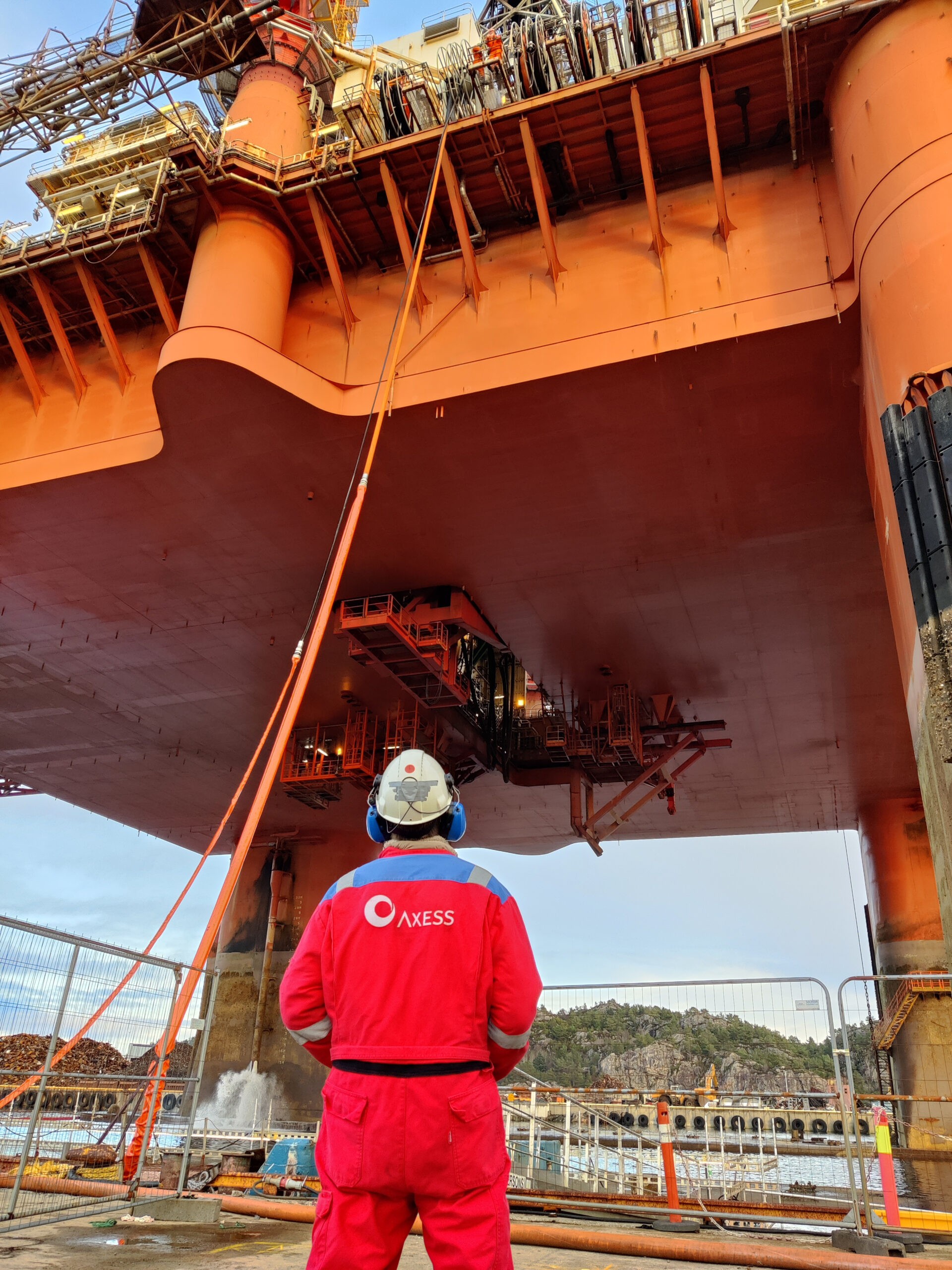
Axess Digital develops inspection software for heavy industry, including oil & gas and offshore environments. These projects operate in regulated, high-risk conditions where documentation accuracy is critical.


The 3D View app was part of a broader platform initiative aimed at improving how inspectors document structural damage. The goal was not just to visualize assets, but to create a system where inspection findings are directly connected to physical geometry.

My role

Led interaction design and workflow definition for the 3D inspection experience, working closely with engineers and developers to translate complex inspection logic into a usable system.
The challenge

Inspection workflows were fragmented.

Inspectors documented findings in structured forms, but the connection between written reports and physical structure was often indirect. Users had to mentally translate between:

  • 2D reports
  • 3D models
  • Real-world structures

This created friction, ambiguity, and inefficiencies in review processes. The core challenge was to reduce cognitive translation. The system needed to connect spatial thinking with structured reporting.

Understanding the domain

Industrial inspectors do not think in screens or forms. They think spatially.

Through observation and collaboration sessions, we identified that:

  • Inspectors rely on visual landmarks
  • Context is more important than hierarchy
  • Accuracy is more important than speed
  • Any ambiguity in documentation can have serious consequences

This meant the 3D model could not be decorative. It had to become the primary interaction layer.

Design strategy

We shifted the product from form-driven reporting to context-driven interaction.

Key decisions:

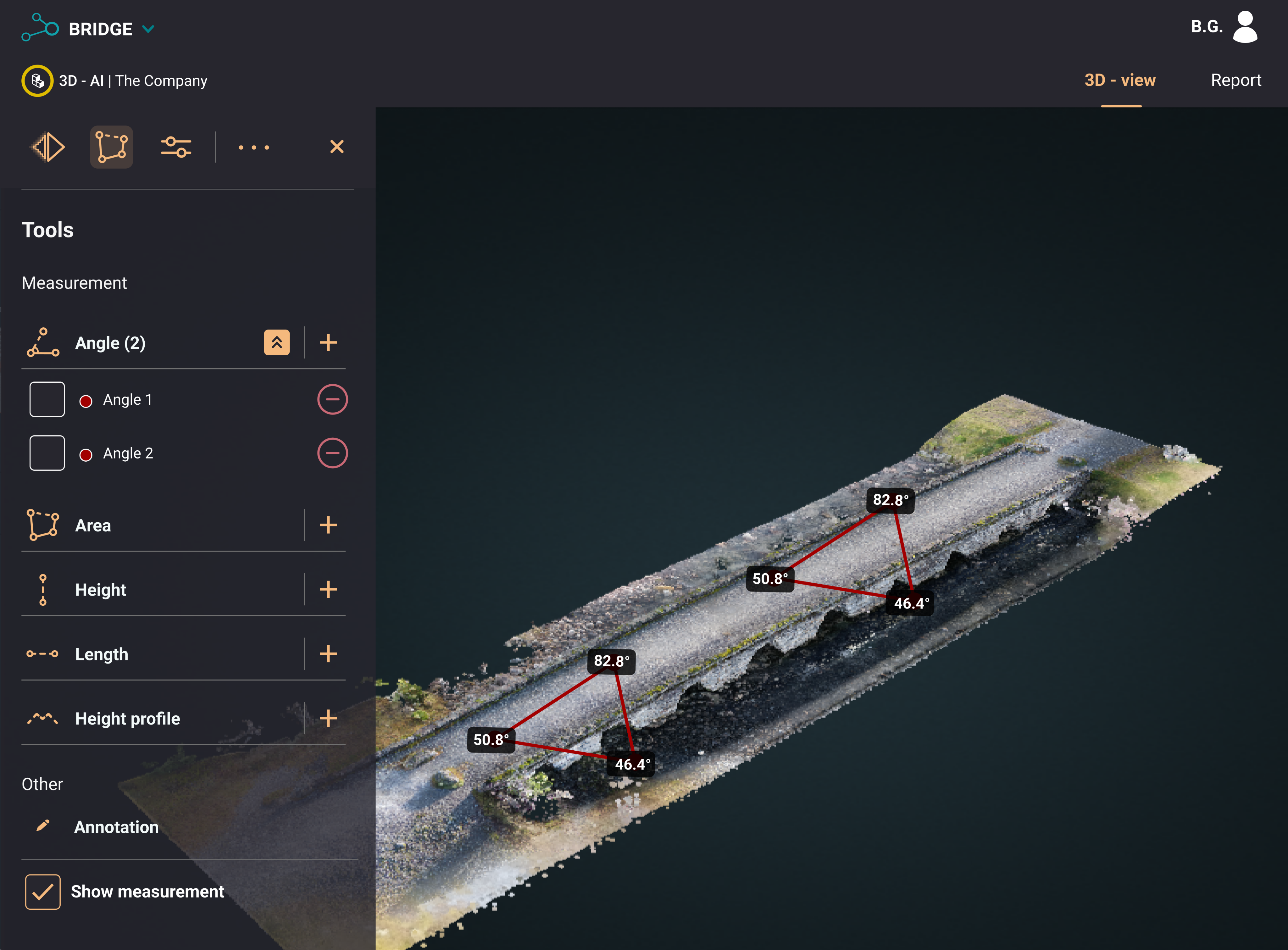
  • The 3D model became the anchor of the experience
  • Inspection points were directly attached to geometry
  • Structured taxonomies were applied to damage classification
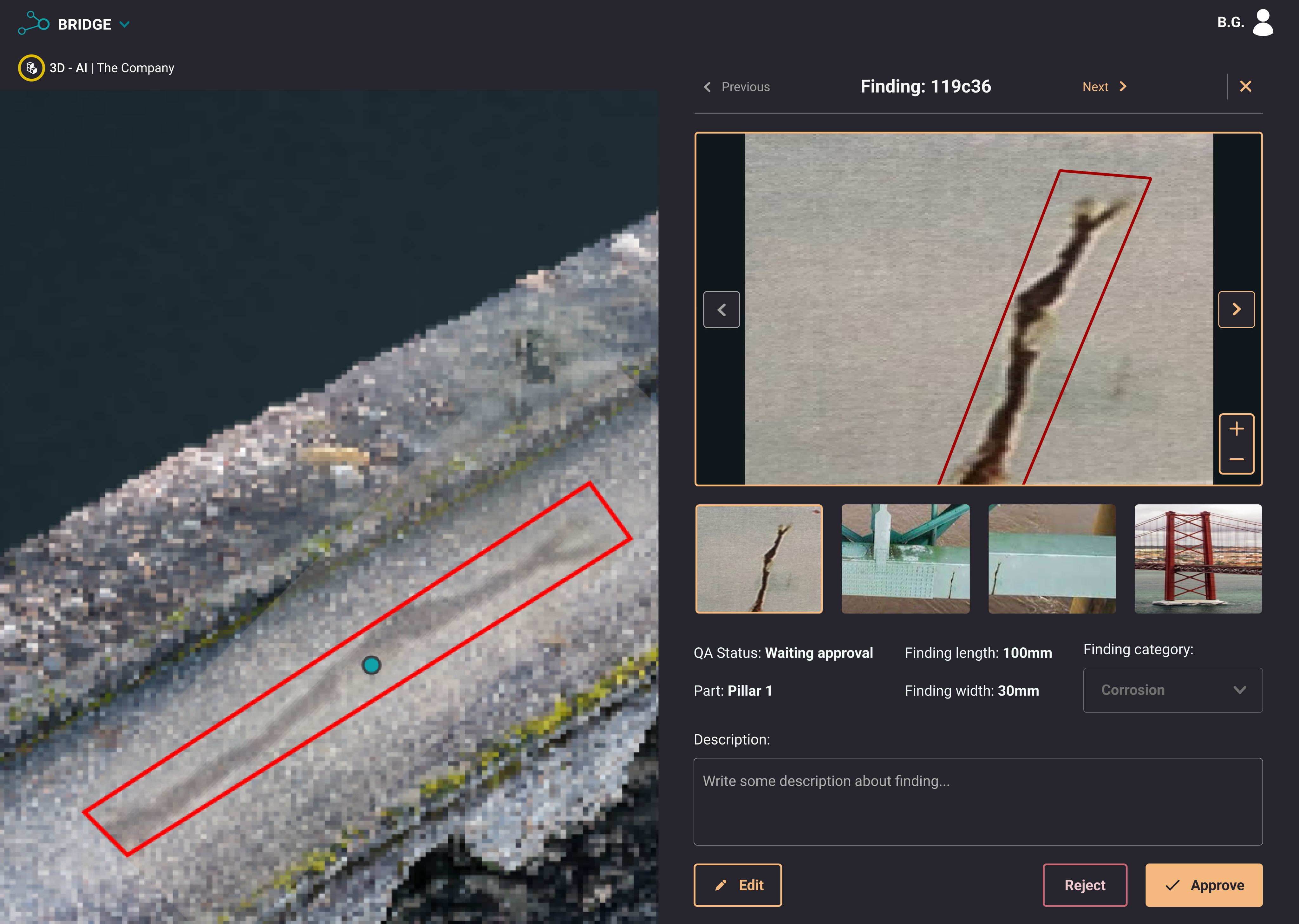
  • Contextual side panels allowed detailed documentation without losing spatial reference

The interface was treated as a data system, not just a viewer.

Complexities we had to solve

This was not a simple visualization task.

We had to balance:

  • Model performance vs level of geometric detail
  • Information density vs visual clarity
  • Structured reporting requirements vs field flexibility
  • Different inspection scenarios across assets

We also designed for cases where geometry mapping was incomplete, ensuring inspectors could still document findings without breaking system logic.

The Solution

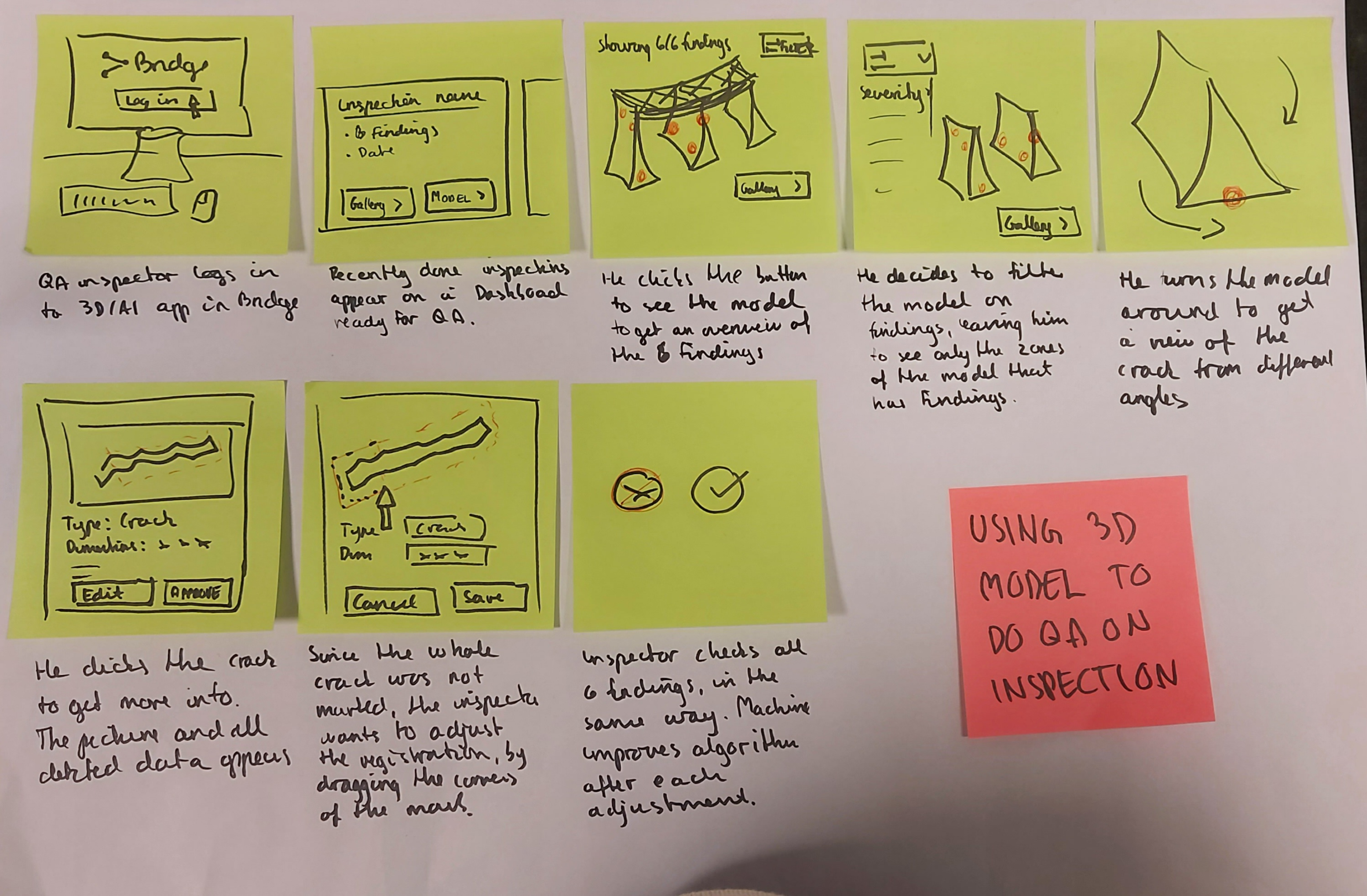
The final system allowed users to:

  • Navigate complex 3D structures
  • Select structural elements directly
  • Attach inspection findings to specific geometry
  • Classify damage using predefined taxonomies
  • Review findings through contextual panels
  • Filter and layer inspection data for clarity

By anchoring reporting to spatial context, we reduced ambiguity and improved traceability.

Impact

The 3D View became a core part of Axess Digital’s inspection platform offering.

The solution improved:

  • Documentation accuracy
  • Clarity between field and office teams
  • Review workflows for engineering managers
  • Long-term asset tracking

It supported industrial clients operating in regulated environments where precision is non-negotiable. In environments where inspection documentation directly affects operational safety, reducing ambiguity is not just a UX improvement, it is a risk reduction factor.

What I learned

Designing for industrial environments taught me that clarity and traceability matter more than visual polish. Reducing cognitive translation between physical structures and digital documentation was the real challenge. I learned that expert users require deep alignment with domain logic, not generic UX patterns. Complex products succeed when systems, data, and workflows are designed as one connected structure.

Let’s work together

Connect with me on:

3D Inspection platform

Designing a spatial inspection system for industrial infrastructure

Context

Axess Digital develops inspection software for heavy industry, including oil & gas and offshore environments. These projects operate in regulated, high-risk conditions where documentation accuracy is critical.


The 3D View app was part of a broader platform initiative aimed at improving how inspectors document structural damage. The goal was not just to visualize assets, but to create a system where inspection findings are directly connected to physical geometry.

My role

Led interaction design and workflow definition for the 3D inspection experience, working closely with engineers and developers to translate complex inspection logic into a usable system.
The challenge

Inspection workflows were fragmented.

Inspectors documented findings in structured forms, but the connection between written reports and physical structure was often indirect. Users had to mentally translate between:

  • 2D reports
  • 3D models
  • Real-world structures

This created friction, ambiguity, and inefficiencies in review processes. The core challenge was to reduce cognitive translation. The system needed to connect spatial thinking with structured reporting.

Understanding the domain

Industrial inspectors do not think in screens or forms. They think spatially.

Through observation and collaboration sessions, we identified that:

  • Inspectors rely on visual landmarks
  • Context is more important than hierarchy
  • Accuracy is more important than speed
  • Any ambiguity in documentation can have serious consequences

This meant the 3D model could not be decorative. It had to become the primary interaction layer.

Design strategy

We shifted the product from form-driven reporting to context-driven interaction.

Key decisions:

  • The 3D model became the anchor of the experience
  • Inspection points were directly attached to geometry
  • Structured taxonomies were applied to damage classification
  • Contextual side panels allowed detailed documentation without losing spatial reference

The interface was treated as a data system, not just a viewer.

Complexities we had to solve

This was not a simple visualization task.

We had to balance:

  • Model performance vs level of geometric detail
  • Information density vs visual clarity
  • Structured reporting requirements vs field flexibility
  • Different inspection scenarios across assets

We also designed for cases where geometry mapping was incomplete, ensuring inspectors could still document findings without breaking system logic.

The Solution

The final system allowed users to:

  • Navigate complex 3D structures
  • Select structural elements directly
  • Attach inspection findings to specific geometry
  • Classify damage using predefined taxonomies
  • Review findings through contextual panels
  • Filter and layer inspection data for clarity

By anchoring reporting to spatial context, we reduced ambiguity and improved traceability.

Impact

The 3D View became a core part of Axess Digital’s inspection platform offering.

The solution improved:

  • Documentation accuracy
  • Clarity between field and office teams
  • Review workflows for engineering managers
  • Long-term asset tracking

It supported industrial clients operating in regulated environments where precision is non-negotiable. In environments where inspection documentation directly affects operational safety, reducing ambiguity is not just a UX improvement, it is a risk reduction factor.

What I learned

Designing for industrial environments taught me that clarity and traceability matter more than visual polish. Reducing cognitive translation between physical structures and digital documentation was the real challenge. I learned that expert users require deep alignment with domain logic, not generic UX patterns. Complex products succeed when systems, data, and workflows are designed as one connected structure.